Microsoldering is precision repair performed on the individual components of a phone, tablet or laptop motherboard - work measured in millimetres, done under a microscope. It is what makes the difference between “the board is dead, buy a new device” and a working machine with your data intact. In 2026 it matters more than it ever has, and it is worth understanding why.
Quick answer: microsoldering is component-level board repair: replacing or reworking individual chips, connectors and power circuitry instead of swapping the whole motherboard. It is the right tool when the fault is localised - charging ICs, liquid-damage corrosion, torn connectors, short circuits - and can be part of recovering data tied to the original board.
Why board-level repair matters more in 2026
Three industry shifts have quietly made microsoldering useful for faults that a parts swap cannot resolve.
Some devices have soldered memory and storage. Phones and many thin laptops cannot be treated like a computer with a removable drive. Other laptops still have replaceable SSDs. The exact design determines whether repairing the original board may be needed for data access.
Encryption ties data to the original board. Modern devices encrypt storage with keys held in security chips on that specific motherboard. Move the storage chips to another board and you usually get unreadable noise. If the files matter, the original board must be brought back to life - precisely microsoldering territory.
Replacement boards became painfully expensive. With component prices up sharply across the industry, a manufacturer’s “replace the motherboard” quote is often close to the value of the device. Repairing one failed component for a fraction of that price changed from a niche alternative into the economically obvious route.
What microsoldering actually fixes
- Charging faults - failed charging ICs and power-management chips behind a port that looks perfectly fine;
- Liquid damage - corrosion cleaned under the microscope, damaged components replaced, corroded traces rebuilt;
- No-power faults - shorted capacitors and failed power rails traced and replaced;
- Damaged connectors - battery, display and flex connectors torn off in falls (or DIY attempts), re-soldered or replaced;
- Backlight and image faults - the classic “phone works but screen is dark” circuit repair;
- Data-recovery groundwork - stabilising a dead board long enough to unlock the device and copy everything off.
How we find the fault
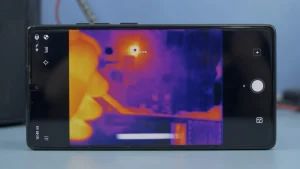
Electrical measurements, board information and microscope inspection help narrow the fault. Thermal imaging can identify an area to investigate, but cannot by itself identify the failed component. Some boards have a localised repairable fault; others have damage across several circuits.
When microsoldering is the wrong answer
Honesty is part of the discipline. Extensive corrosion across many circuits, boards burned by charging into a short for weeks, or physical damage through multiple layers can make repair unreliable or uneconomic. In those cases the right recommendation is a replacement board (data permitting), recovery-only work, or a frank “not worth it”. Our guide on repair versus replacement walks through how that decision is made.
Frequently asked questions
Is microsoldering the same as replacing a charging port?
Not always. Some ports are modular parts; others are soldered to the board, and often the real fault is in the charging circuitry behind a healthy-looking port. Diagnosis establishes which before anything is replaced.
Can microsoldering recover data from a dead phone?
Frequently, yes - by repairing the original board far enough for the device to boot and be unlocked. Because of device encryption this is usually the only route. No serious workshop guarantees recovery, but “the board is dead” is not the same as “the data is gone”.
Does every repair shop offer this?
No. It requires microscopes, thermal imaging, board schematics, donor components and years of practice. Many shops send board-level work out - often to workshops like ours. Ask directly whether the diagnosis happens at component level and on site.
Is a microsoldered repair reliable?
A properly executed component repair on an otherwise healthy board is a lasting repair, and ours carry a warranty. What a good workshop will not do is warranty a board it believes is marginal - you should hear that assessment before work starts, not after.
Dead device, or a “motherboard fault” verdict from elsewhere? A board-level diagnosis gives you a straight answer about what failed and whether fixing it makes sense.