Device: MacBook Air 13-inch, 2020 (A2179, Intel)
Symptom: liquid damage; the MacBook would not work
Diagnosis: after a liquid-damage clean, damaged components across much of the logic board
Advice: a long repair attempt with no guarantee, realistically aimed at the data
Outcome: the owner decided not to go ahead
Not every liquid-damaged MacBook should be repaired. This one is here because of what we told the owner.
What We Found
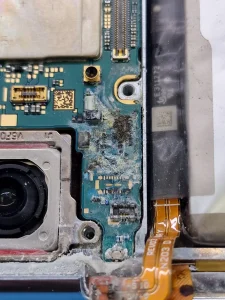
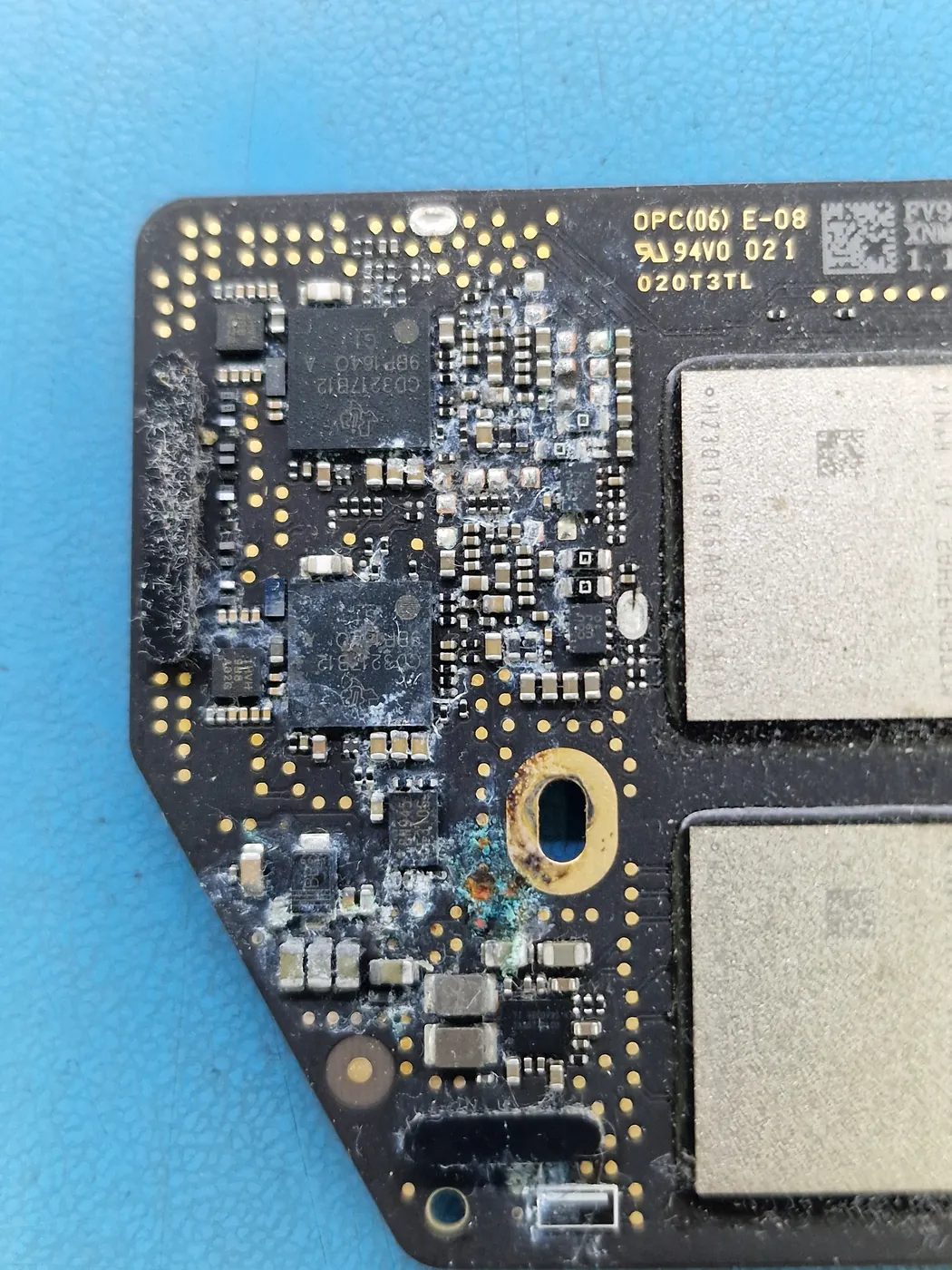
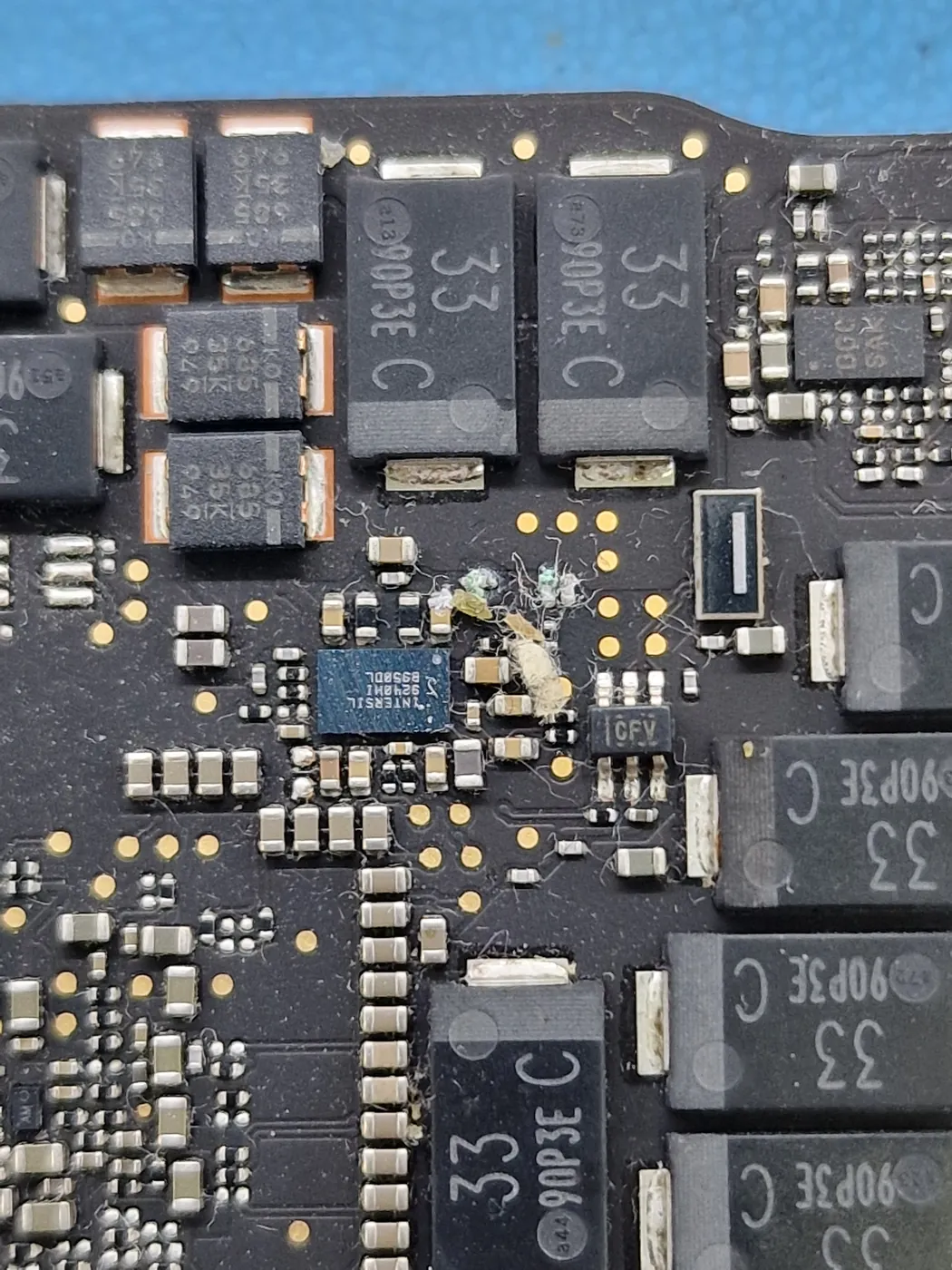
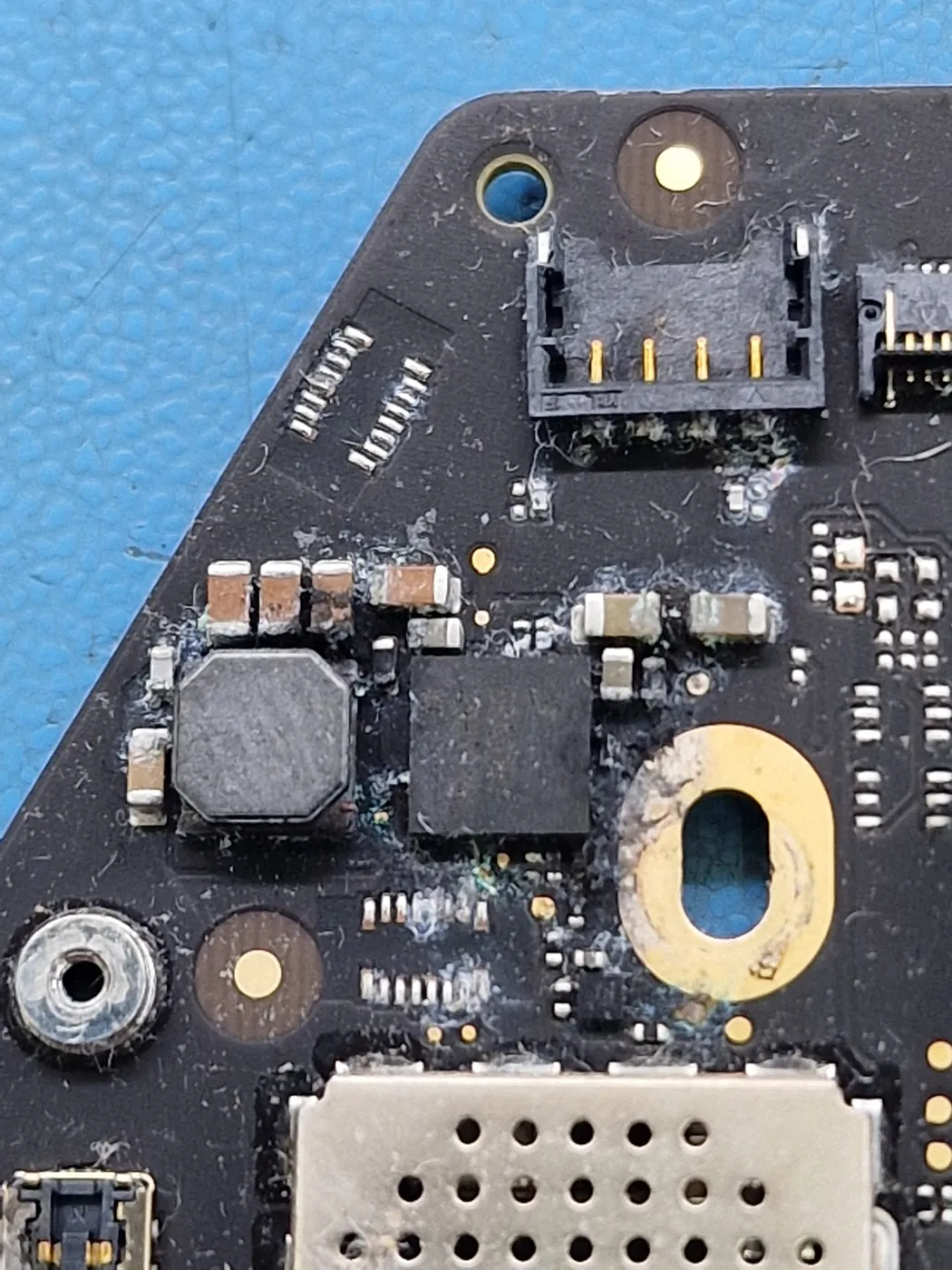
The liquid had reached a large part of the logic board. It needed a liquid-damage clean before anything could be measured, and that showed how far the damage went: corrosion and damaged components around the battery connector, the power circuits and the chips beside the storage.
On this model the storage is soldered to the logic board and encrypted by the T2 chip. The files can only be reached through a board that works.
What We Advised
We told the owner plainly that this was a serious case. A repair attempt was possible, but it would take a lot of bench time and could still fail. Its realistic goal was access to the data, not a MacBook back in daily use. We explained what the attempt would involve before any of that work started.
The Outcome
The owner decided not to go ahead. With those facts, that was a fair decision. If a repair is not worth doing, we tell you before you pay for it.
See MacBook Air 13-inch repair, or liquid damage for what to do in the first hour.