An IP68 rating does not mean a phone is safe in every wet situation. It describes protection under specified test conditions. Depth, duration and the manufacturer’s restrictions still matter, as do wear, impact damage and previous repairs.
What the rating leaves out
Check the specification for your exact model. A laboratory fresh-water test is not the same as salt water, a swimming pool, hot water or a high-pressure jet. Water resistance can decrease over time, but there is no single expiry date that applies to every phone.
Apple’s water-resistance guidance describes model-specific ratings and advises against deliberately submerging an iPhone. Do not use a rating as a reason to test a damaged phone in water.
If the phone has just become wet
Disconnect charging cables. If liquid may have entered the device, switch it off if you can do so normally and do not keep trying to start or charge it. Dry the outside with a soft cloth. Avoid heat, compressed air, objects pushed into the connector and rice.
A wet-port alert and full immersion are not the same situation. Follow the manufacturer’s drying instructions for a connector alert; a phone exposed to salt water, a spill inside the case or abnormal heat needs assessment. Our iPhone liquid-damage guide covers the next steps.

Why a working phone may still need attention
Liquid and residue can affect connections and components without immediately stopping the phone. If it begins restarting, losing touch response, charging intermittently or heating unexpectedly after exposure, stop testing it. Do not erase it as a first response to a suspected hardware fault.
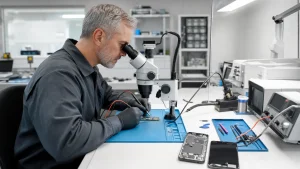
The condition of the board and connectors must be inspected. A moisture indicator is evidence of exposure, not a map of the fault or a measurement of how much data can be recovered.
Warranty and consumer rights are different questions
Apple says liquid damage is not covered by its one-year limited warranty, while noting that consumer-law rights may still apply. A triggered indicator therefore does not justify saying the owner has no rights or options. The applicable warranty, protection plan and circumstances need to be checked. Read Apple’s explanation.
What happens to resistance after repair?
Opening a sealed device disturbs its seals. Replacement adhesive and careful assembly matter, but neither is a blanket guarantee of the original IP rating. Ask what sealing work and checks are included. We would not advise treating a previously damaged or repaired phone as safe for deliberate immersion.
The repair goal matters
Returning the phone to dependable daily use may require different work from recovering its files. If the data is irreplaceable, say so before another repair or replacement is authorised. Contact Fixfactor about liquid-damage assessment with the model, liquid involved and what happened afterwards.