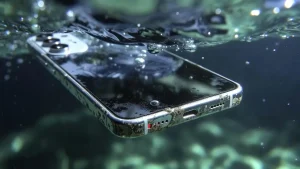
A wet phone can look perfectly normal at first. The damage usually develops later, as moisture and residue corrode connectors, display circuits and the motherboard. What you do in the first ten minutes - and what you avoid doing - has more influence on the outcome than anything a workshop can do a week later.
All repair guides


Phone Water Damage: What To Do Immediately (and What Not To Do)
In this article
Quick answer: get the phone out of the liquid, switch it off, and do not charge it. Do not put it in rice - even Apple’s own guidance now warns against it. Dry the outside, leave it powered off in a ventilated spot, and arrange a professional assessment quickly. Electricity flowing through wet components is what kills phones; corrosion is what kills them slowly.
The first ten minutes
| Do | Why |
|---|---|
| Take it out and switch it off immediately | Current through wet circuits causes short circuits - the fatal kind of damage. |
| Remove the case and SIM tray | Both trap liquid against the phone; an open SIM slot also helps moisture escape. |
| Wipe the outside; tap gently, ports downwards | Removes the liquid you can reach without pushing it further in. |
| Leave it off in a dry, ventilated place | Airflow at room temperature is the safest drying you can do at home. |
| Book an assessment - ideally within a day or two | Corrosion is progressive. Early cleaning is routine; late cleaning is board repair. |
What not to do - including the rice myth
No rice. The advice survived for years because phones sometimes recovered anyway; the rice took the credit. In reality it dries no faster than open air, and Apple’s support documentation warns it can push starch dust into the phone. The same document warns against two other folk remedies: no heat (radiators, hairdryers - heat drives moisture deeper and damages seals and the battery) and no compressed air, which forces liquid further inside.
No charging until the phone has been assessed, even if it seems fine - charging a wet charging port is how “it survived the drop in the sink” becomes “it died two days later”. If a liquid-detection alert appears, take it seriously.
No “it works, so it’s fine”. This is the most expensive assumption in this article. Mineral residue keeps conducting and corroding after the water evaporates. We regularly open phones that “fully recovered” from a soaking weeks earlier - the boards tell a different story.
“But my phone is water resistant”
IP ratings are laboratory results for a new, sealed device in fresh water. Samsung’s own support pages spell out what manufacturers rarely say on stage: water resistance is not permanent and diminishes with normal wear. Age, drops, previous repairs and heat all degrade the seals - and salt water, pool water, coffee or soap are far more aggressive than the fresh water the rating was tested with. Treat the rating as a safety margin that shrinks over the phone’s life, not a promise.
What a professional assessment actually involves
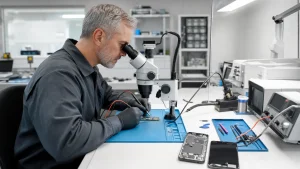
We open the phone, disconnect the battery, and inspect the board and connectors under magnification. Liquid-affected areas are cleaned ultrasonically, corrosion is removed, and any components already damaged are identified - often board-level work under the microscope. Then the phone is reassembled and tested honestly: some liquid-damaged phones are fine after cleaning, some need component repairs, and a minority are beyond sensible repair. You get told which category yours is in before committing to anything.
If the phone will not turn on - and the data matters
Do not keep trying to power it on, and do not charge it “to see”. Every powered minute on a corroded board risks the components that hold your data. A phone that is dead after liquid is frequently recoverable - the board is repaired far enough to boot and be backed up, which is often the only route to the data on an encrypted device. Bring it in as it is, the sooner the better.
Frequently asked questions
My phone fell in the toilet / sea / a drink - does the liquid type matter?
Yes. Fresh water is the kindest case. Salt water corrodes aggressively within hours; chlorinated, sugary or soapy liquids leave conductive residue. With anything other than fresh water, professional cleaning promptly is strongly advised even if the phone seems fine.
How long do I have?
Corrosion starts within hours but the practical window is usually days, not minutes. The sooner the board is cleaned, the more routine the job. After a week of “wait and see”, expectations should shift from cleaning to repair.
The phone works but the screen has marks / the speaker is quiet / charging is flaky.
Those are classic early corrosion symptoms. The fault list tends to grow rather than shrink - an assessment now catches the damage while it is still contained.
Is a liquid-damaged phone worth repairing?
Often yes, especially with new-device prices where they are. The honest answer depends on what the inspection finds - which is exactly what a diagnostic establishes before you spend anything on repair.