

Screen Repairs
Cracked, black, ghost-touching or lifting from the frame. Most replacements take 15 minutes to two hours once the panel is in our hands - and you get the price, and the honest catches, before anything is opened.
- Phones, tablets, laptops, Surface, handhelds
- 6-12 month warranty
- Wimbledon or post it to us
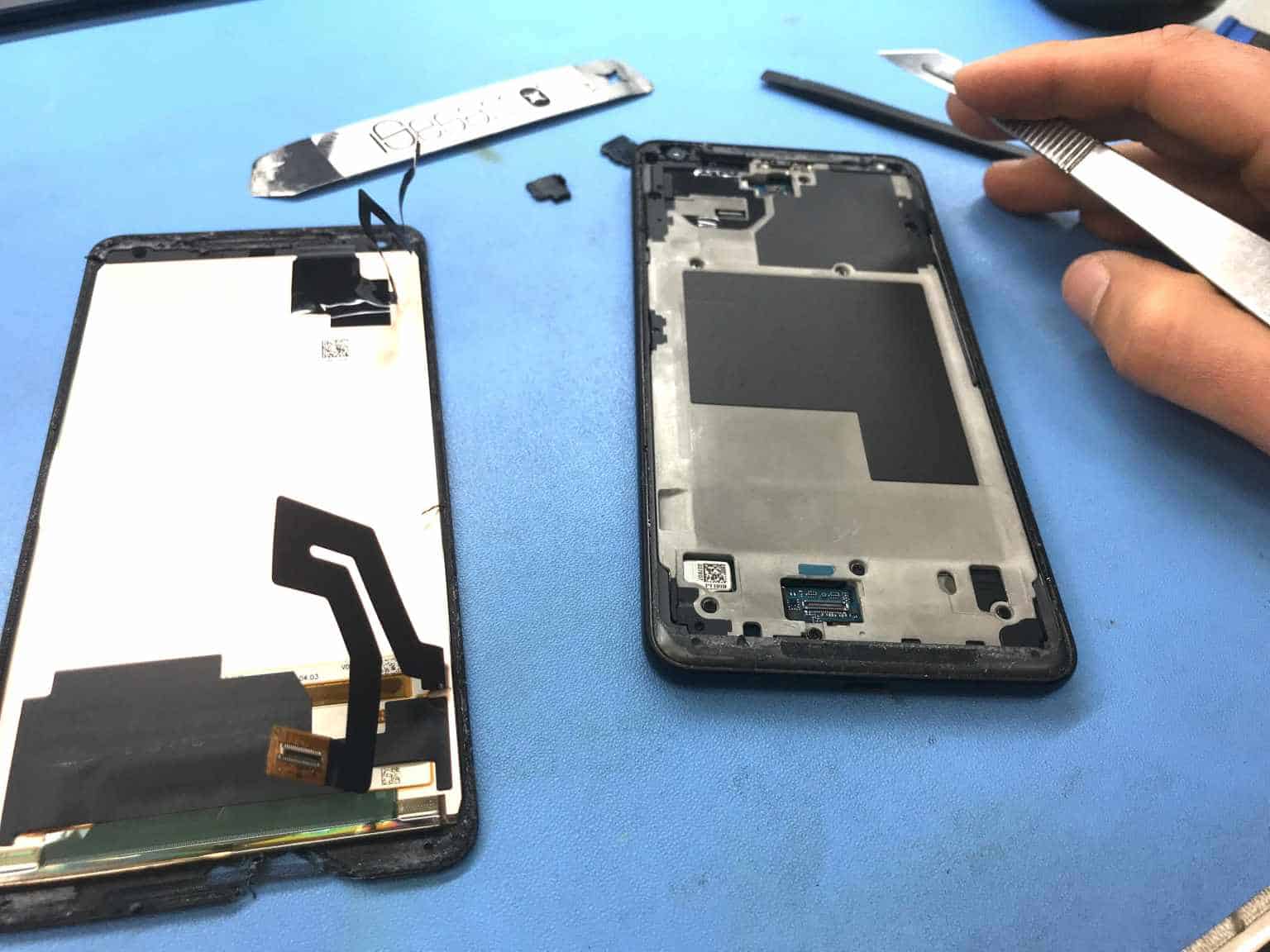
There is no separate sheet of glass behind the crack. Prising the three bonded layers apart is a factory process run in reverse, and it usually costs the panel.
“Can You Just Replace the Glass?”
It is the first thing almost everyone asks, and it is a fair question - the glass is the bit that broke.
On a modern phone or tablet there is no separate glass to replace. Glass, touch layer and display panel are laminated into one part at the factory, and the front camera, sensors and earpiece are housed in the same assembly. So we replace the assembly - and we would rather explain why than quote you for something that fails in a month.
Separating the layers is a lab process
Glass, digitiser and panel are laminated under pressure. Pulling them apart cracks the panel far more often than it works, and a re-laminated screen picks up bubbles and dust.
Half your device lives in the assembly
Front camera, proximity and ambient light sensors, earpiece, sometimes the frame. On a laptop the hinges and lid can be part of the same unit.
Glass-only work does not hold
Where it is technically possible it is slow, expensive and fragile - which is why shops advertising it cheaply are usually doing something else entirely.
LCD or OLED - the One Thing That Decides the Price
Nothing else moves the cost of a screen repair as much. The difference is where the light comes from.
Backlit Panel
One backlight shines through a liquid-crystal layer. Mature technology, made in volume by many factories, and straightforward to replace.
Usually Found In
- Budget and mid-range phones
- The large majority of laptops
- Most iPads and other tablets
- Older flagship phones and gaming handhelds
Cheaper part, wider supply, and a spare is nearly always available.
Self-Lit Pixels
Every pixel makes its own light, so blacks are genuinely black. Harder to manufacture, made by far fewer factories, and the panel is the expensive part of the device.
Usually Found In
- Recent iPhones and Android flagships
- Samsung Galaxy Tab S tablets
- A growing number of premium laptops
- Switch OLED and Steam Deck OLED
Dearer part by a wide margin, and on some models it decides the repair-or-replace question outright.
Why this matters to you: on an older LCD device a screen repair is usually an easy yes. On a recent OLED flagship the panel can be a serious fraction of what the device is worth - which is the point at which we stop selling and start advising. Ask for your model and we will tell you which side of that line you are on.
On a Screen Repair, the Part Is the Bill
Which is the opposite of almost every other repair we do - and it is why screen prices swing so hard between one model and the next while our labour barely moves.
Which Replacement Screen Goes In
Where a choice exists, it is yours. Here is what actually differs - not a nudge towards the middle one.
| Original | Quality aftermarket | Standard | |
|---|---|---|---|
| What it is | The panel the device left the factory with | Built to the same layout by a supplier we have used for years | A working screen at the lowest sensible price |
| Colour and brightness | Identical to new | Sharpness and resolution hold up; colour temperature can sit slightly warmer or cooler | Dimmer, and colours visibly less accurate |
| Features | Everything behaves exactly as before | On OLED devices, this is where pairing messages show up | Pairing messages likely; True Tone often lost |
| Availability | Limited on some models; for older devices, often not made at all | Far more models, and sooner | Often the only stock left for legacy models |
| Cost | Dearest | Where most repairs land | Lowest |
| We would suggest it when | The device is recent or valuable, or you work in colour | Most of the time - for most people the difference is invisible in daily use | A spare, a child’s first phone, or a device you are running until it dies. Not one you are keeping for years |
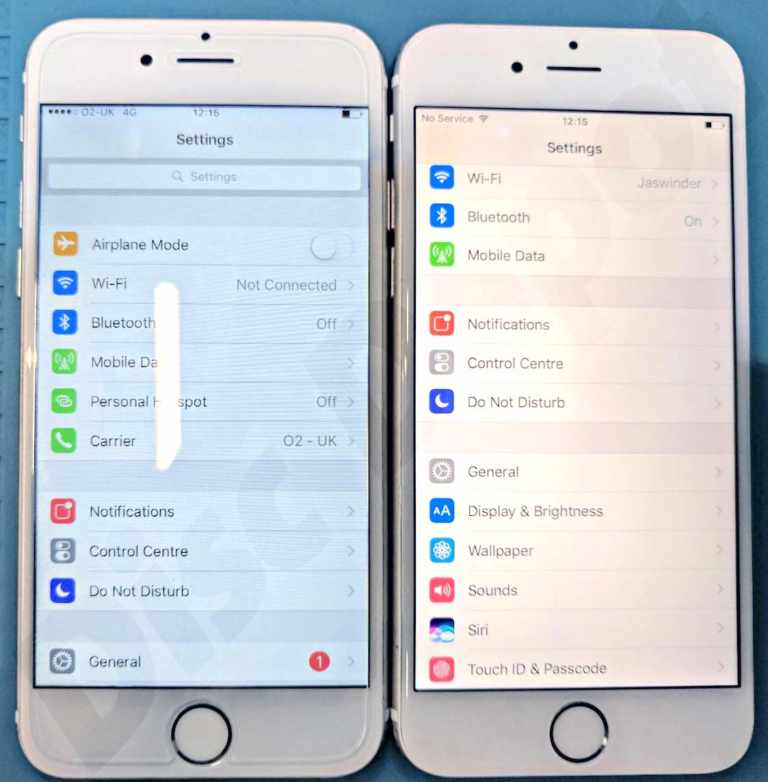
Two iPhones, the same screen, photographed together on our bench. One has its original display, the other a copy.
This is the whole of the difference for most people: a white that leans warmer or cooler, and a viewing angle that shifts a little sooner. Side by side it is obvious. On its own, in your hand, it usually is not - which is exactly why we show you the pair rather than describe it.
What Changes on Your Device Afterwards
Four things nobody mentions until it is too late. You should hear them from us, at the counter, before you decide.
Your Phone May Notice the Screen Is Not Its Own
Apple, Samsung and Google pair displays to devices. After a replacement with anything other than a factory-paired panel, an iPhone logs it under Parts & Service History and may show a message. The screen works normally; the phone simply knows.
What we doTell you before we start whether your model does this, and what the message looks like - so it is not a surprise a week later.
True Tone and Auto-Brightness Can Behave Differently
True Tone is tied to data stored in the original display. On some models it can be carried across to the new panel; on others it cannot, by anyone. Auto-brightness depends on the ambient light sensor, which sits in the assembly and gets transferred.
What we doCheck what is possible for your exact model and say so plainly, rather than you finding out with your phone.
Face ID Survives - Unless the Repair Breaks It
The Face ID hardware lives in the front sensor assembly, not the panel, so a careful transfer keeps it working. The catch is that it is paired to your logic board: if that flex cable tears, nobody can restore Face ID. Not us, not Apple, not a board-level specialist.
What we doTreat that flex as the most fragile thing on the bench, and tell you immediately if an earlier repair has already damaged it.
Water Resistance Drops
The factory seal is applied with equipment no independent shop has. We use quality adhesive and reseal properly, but the original IP rating is a factory condition, not a repairable one. Manufacturer repairs carry the same caveat, and the seal degrades with age regardless.
What we doReseal it as well as it can be resealed, and tell you to treat the device as splash-resistant rather than swim-proof from then on.
How a Screen Repair Runs
15 minutes to two hours once the panel is in our hands. Whether you wait or leave it depends on the device and on whether the part is on the shelf.
-
Check and Photograph
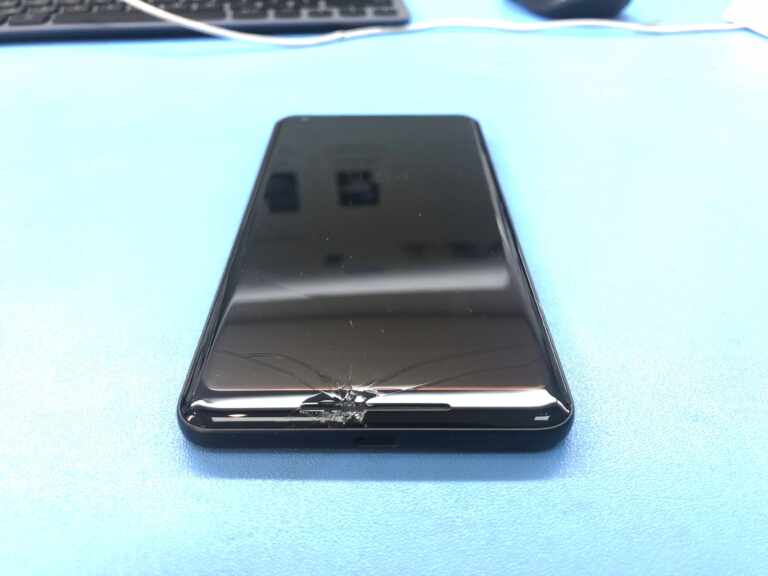
Cameras, speakers, buttons, sensors, charging - tested and recorded before anything opens. Nobody argues afterwards about what was already there.
-
Open It Properly
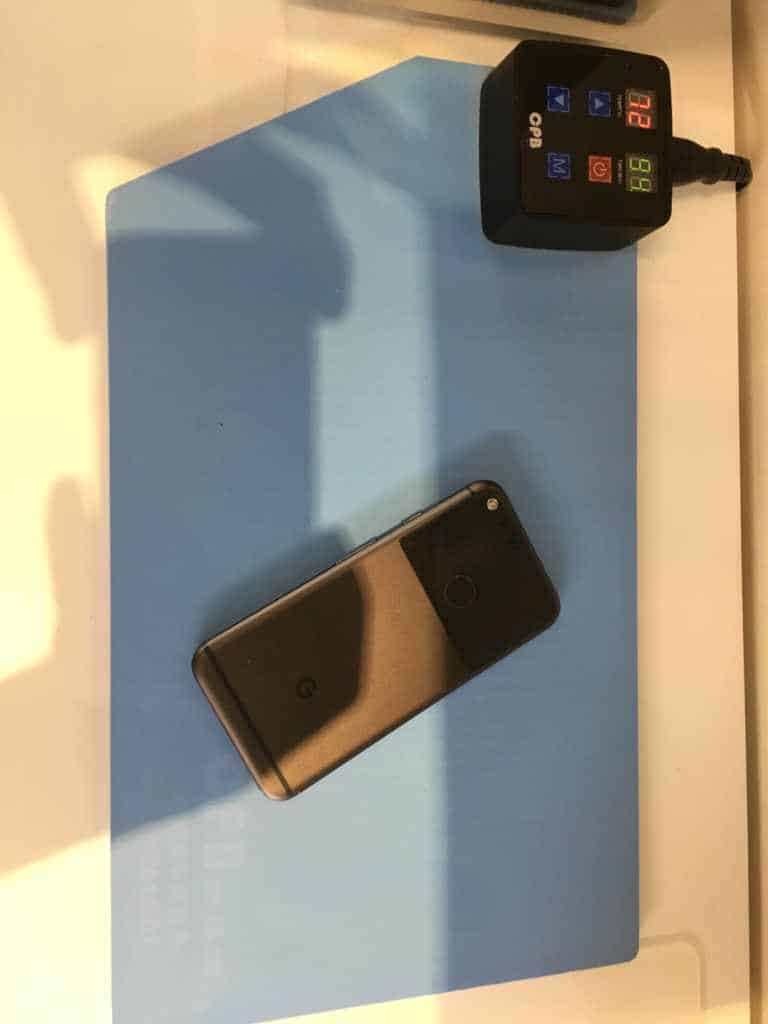
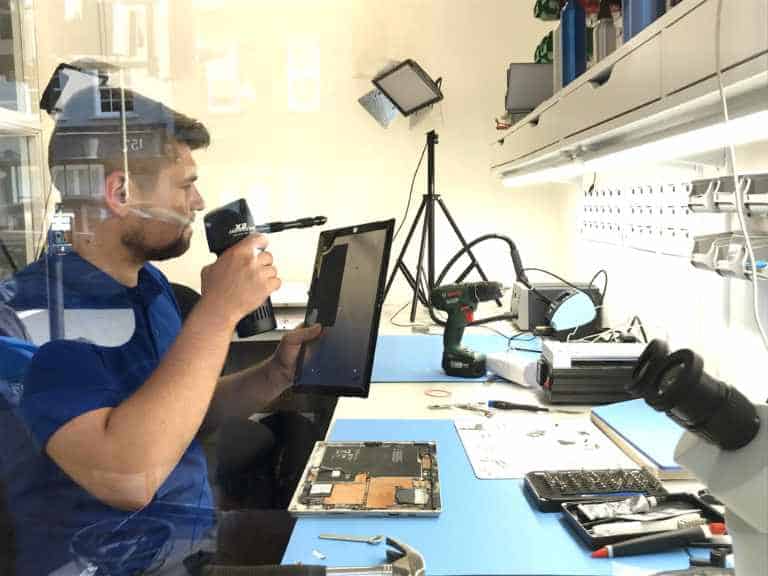
Controlled heat to soften the adhesive, the right tools for the seams, screws mapped so every one goes back where it came from.
-
Transfer, Fit, Seal
Camera, sensors and earpiece move across from the old assembly - including the Face ID flex, handled like it is made of paper. New panel aligned, fresh adhesive, resealed.
-
Test Everything Again
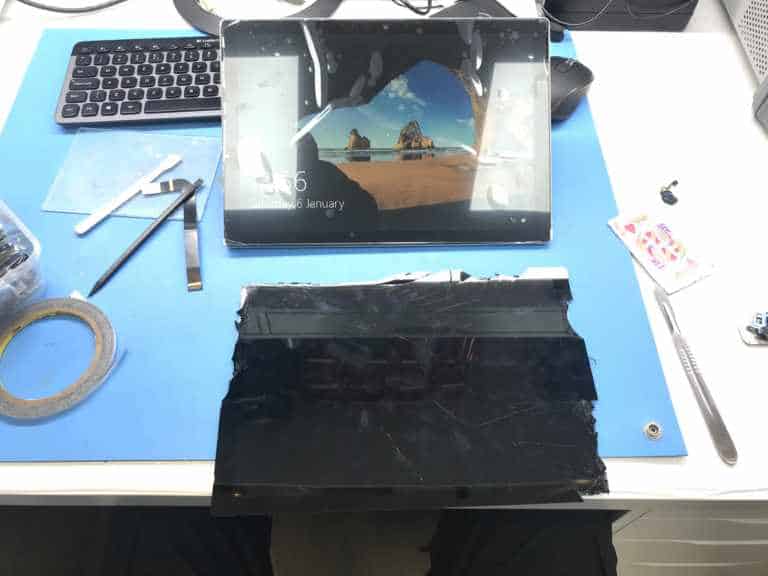
Touch across the whole panel, brightness, colour, cameras, Face ID or fingerprint, speakers, proximity. Then the same checks as step one, so the comparison is like for like.
If the device took a hard knock: a cracked screen does not need a paid diagnosis - we price it from the model. But a drop heavy enough to break glass can also disturb something inside, and that is when a proper diagnostic earns its fee instead of us guessing at your expense.
What We Put Screens In
If it has a display and it fits on the bench, it is probably on this list.
Screen Repair FAQ
Can I wait while you do it?
Often, yes - standard replacements run 15 minutes to two hours once we have the panel, and phones are usually at the quick end of that. What decides it is stock: if your model’s screen is on the shelf you can generally wait, and if it has to be ordered you cannot. Ring or message before you set off and we will tell you which it is rather than have you sit in the shop finding out.
The glass is cracked but the display still works. Do I need to fix it?
Not urgently, but sooner is cheaper than later. A crack lets dust and moisture past the seal, and a cracked panel is far easier to finish off with a second, gentler knock. The other reason is your fingers - cracked glass does shred them, quietly, over weeks.
My screen is not cracked, it has lines or patches. Is that still a screen job?
Usually. Lines, colour bands, dead patches, a screen that only works at certain angles and ghost touches that fire on their own are nearly always the panel or its connector. Nearly always is not always, though: the same symptoms can come from the board, and that is a different repair with a different price, which is why we check before quoting.
Will my Face ID or fingerprint sensor still work?
Face ID keeps working if the front sensor assembly is transferred intact, which is the normal outcome. It is paired to your logic board, so if that flex has already been torn - by an earlier repair, or by the impact itself - nobody can bring it back, us included. Under-display fingerprint sensors are usually part of the screen assembly and come with the new panel. We test both before you leave.
Will my phone show a message about the screen afterwards?
On some models, yes. Manufacturers pair displays to devices now, so a phone can tell that its panel is not the one it left the factory with and will note it in settings. It does not stop the screen working. We will tell you before we start whether your model does this and exactly what you will see.
Is it still waterproof afterwards?
Not to the original rating. That seal is applied in a factory with equipment no independent shop has. We reseal with proper adhesive and it will handle rain and splashes, but treat it as splash-resistant from then on. Manufacturer repairs carry the same caveat, and the seal fades with age whether or not anyone has opened the device.
Is it cheaper to buy the screen myself and have you fit it?
Almost never, once it goes wrong. Screens arrive dead or develop faults, and our suppliers take those back - yours will argue. We also cannot warranty a part we did not source, so a fault two months later becomes your problem twice over. If you have already bought one we will usually still fit it; we will just be straight about what that means for the guarantee.
What warranty comes with it?
Between 6 and 12 months depending on the repair and the part, and we tell you which applies before you commit rather than after. It covers the screen and our work on it. It does not cover a fresh drop - that is a new crack, not a returning one, and we can usually tell the difference by looking.
Related Repair Services
Screen damage rarely arrives on its own - we handle all of these in-house.
Tell Us the Model, We Will Tell You the Price
No guessing, no ranges that turn into something else at the counter. You get the figure, the options if there are any, and the honest catches - before anything is opened.