All articles

Why RAM Is Suddenly So Expensive — and What We’re Seeing in the Workshop

If you have priced up a new PC, laptop or phone recently and wondered why everything costs more than it did a year ago, there is one answer behind most of it: memory. RAM has become the most contested component in the industry, and the effects have reached everything from budget phones to the repair bench in our workshop.

Quick answer: AI data centres have bought up most of the world’s memory production. DRAM prices rose by around 172% in 2025 alone, and that cost has fed into new PCs, laptops, graphics cards and now phones. The practical consequence for most people: repairing and keeping the device you already own has rarely made more financial sense than it does right now.

What RAM actually is, in plain words

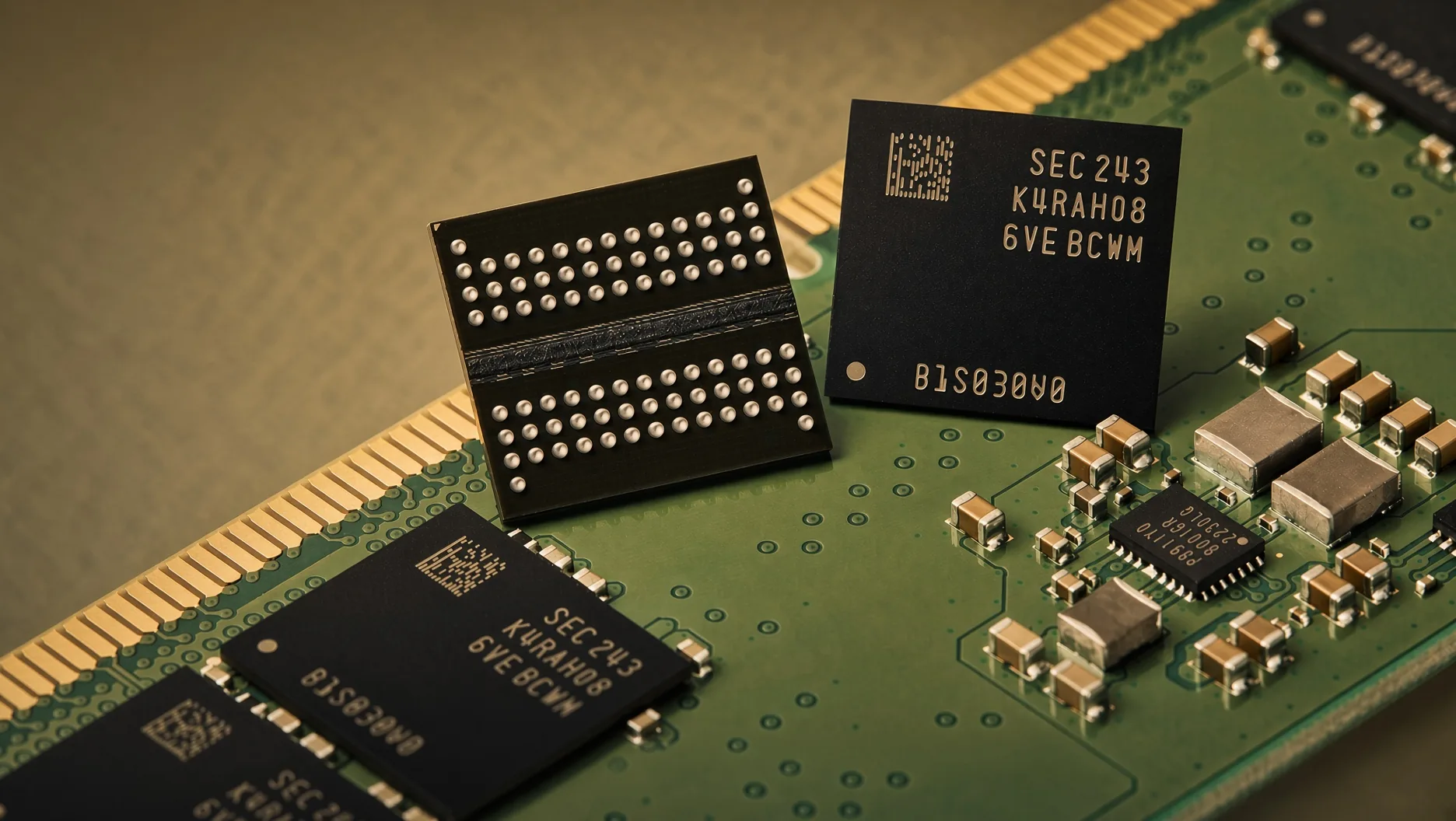
RAM (random access memory) is your device’s short-term working space. Storage — the SSD or hard drive — is where your files live permanently. RAM is where the device holds whatever it is working on right now: the browser tabs you have open, the game you are playing, the photo you are editing. More RAM means the device can juggle more at once without slowing down.

Every computer, laptop, tablet and phone has it. Graphics cards have their own dedicated version (VRAM) for handling images and, increasingly, AI workloads. All of it comes off the same production lines, owned almost entirely by three companies: Samsung, SK Hynix and Micron. That concentration is why the current squeeze has been so brutal — when three suppliers change direction at once, there is nowhere else to go.

What happened to prices

The short version: memory prices did not creep up. They exploded.

What What happened
DRAM (the memory in PCs and laptops) Prices rose a record 172% year on year in 2025, and market researcher TrendForce forecast further record quarterly rises in early 2026. A memory kit that was an afterthought in a PC build is now often the single most expensive part after the graphics card.
New PCs and laptops IDC’s downside scenarios put average PC price rises at up to 8% in 2026. HP told investors that memory costs doubled in a single quarter and now make up around 35% of a PC’s build cost, up from 15–18%. Some vendors have started selling pre-built PCs without RAM at all.
Graphics cards Graphics memory (GDDR) comes from the same constrained supply, pushing GPU prices up and making high-VRAM cards particularly sought after.
Phones and tablets Apple raised prices on MacBooks and iPads in June 2026, citing the memory shortage. Budget phones are hit hardest: analysts note memory and storage already make up 15–20% of the cost of building a mid-range phone — roughly double the share in a flagship — and it is the cheapest, most price-sensitive models that absorb rises worst.

Where the increases came from

This is not a natural disaster or a pandemic-style supply chain accident. It is a deliberate reallocation of production.

The AI boom runs on a specialised type of memory called HBM (high bandwidth memory), used in the accelerator chips that power data centres. HBM sells at far higher margins than the ordinary memory in your laptop, so Samsung, SK Hynix and Micron have shifted as much production capacity towards it as they can. In late 2025, Samsung and SK Hynix signed supply agreements with OpenAI’s Stargate project that could reportedly consume as much as 40% of global DRAM output. Micron went as far as shutting down Crucial, its consumer memory brand, to focus on higher-margin customers.

Ordinary consumer memory is what got left behind. Less of it is being made, everyone still needs it, and the price has responded exactly as you would expect.

What it has done to the second-hand and repair market

When new devices get more expensive, people hold on to what they have. Analysts expect new smartphone shipments to fall in 2026 — IDC’s downside scenarios say roughly 3–5%, while CCS Insight expects a fall of nearly 15%, with the secondary market growing over 15% in the same year — and demand for used and refurbished devices is climbing sharply. The second-hand laptop market is having its strongest run in years, and refurbishers are reporting demand they cannot fully supply. The pressure is reshaping the brands themselves, too — OnePlus’s withdrawal from the UK and Europe this summer happened against exactly this backdrop.

The economics have genuinely shifted. Two years ago, a laptop with a failed motherboard was often written off because a replacement machine was cheap. Today that same replacement costs meaningfully more, and the calculation lands differently: a board-level repair at a fraction of the price of new hardware keeps a perfectly good machine in service.

What we are seeing in the workshop

We have felt this one directly, in three distinct ways.

Graphics card memory upgrades. We have had a noticeable run of enquiries about upgrading the VRAM on graphics cards — typically doubling the memory on high-end cards. We suspect most of these are people wanting to run large AI models locally, where video memory is the hard limit. The upgrade is technically real — the practice is well documented — and it involves desoldering the existing memory chips and fitting higher-capacity ones, which is exactly the kind of board-level work we do. The honest caveat is that the same shortage driving the demand also affects us — replacement memory chips of the right type are scarce and expensive to source, and there are jobs we have had to decline simply because the donor chips cannot be had at a sensible price. Where the chips are available, it remains a specialist but perfectly feasible job.

RAM price enquiries. We regularly get asked what we charge to “replace the RAM” in a PC or laptop, in a tone that suggests people are hoping a repair shop somehow has cheaper memory than the retailers. We understand the instinct, but we buy modules on the same market as everyone else. Where we can add value is different: telling you whether an upgrade is actually worth it on your machine, whether your slowdown is a memory problem at all (it frequently is not), and fitting it properly where the job is not user-accessible.

More repairs on the hardware the increases touch. Our impression — and we present it as an impression, not a statistic — is that repair volume has risen on exactly the categories where new prices have risen: PCs, laptops and graphics cards. Faults that would once have ended in a trip to Currys now end up on the bench. Given the numbers above, that is rational behaviour.

How long will this last?

Nobody credibly knows, and we would treat anyone who claims certainty with suspicion. SK Hynix’s chief executive said in July 2026 that 2027 will be the worst year of the shortage, with demand outstripping supply beyond 2030; IDC’s analysts expect the effects to persist well into 2027. Against that, a rapid expansion of Chinese memory production could ease prices sooner than the incumbents expect. The honest summary: plan on memory staying expensive for at least the next couple of years, and treat any relief as a bonus.

One thing not to do: panic-buy RAM you do not need. Prices are volatile in both directions, and memory bought speculatively at the top of a squeeze has a way of looking foolish later. Upgrade when you have an actual performance problem that more memory solves.

What this means for you

If your current computer is slow, faulty or damaged, 2026 is a year to diagnose before you replace. A proper diagnostic will tell you what is actually wrong and what fixing it costs, so you can compare that against the genuinely higher price of new hardware. Board-level faults that look terminal are often repairable at component level, and for desktops we can advise on upgrades that make sense at today’s memory prices rather than yesterday’s.

Frequently asked questions

Is now a bad time to buy a new PC or laptop?

It is an expensive time. If your current machine can be repaired or sensibly upgraded, that will usually be the better value in 2026. If you genuinely need new hardware, buy for the RAM you will need for the machine’s whole life — adding it later may cost more than it does today.

Can you upgrade the RAM in my laptop?

If your laptop has socketed memory, yes — though many thin modern laptops have memory soldered to the board, where an upgrade is either impractical or a specialist board-level job. We can tell you which category your machine falls into before any money changes hands.

Can you add more VRAM to my graphics card?

On certain models, yes — it is advanced microsoldering work, and feasibility depends on the specific card and on whether the right memory chips can currently be sourced. Ask us about your specific card and intended use, and we will give you a straight answer, including “not worth it” where that is the truth.

Will RAM prices come back down?

Eventually, but the manufacturers themselves are guiding towards 2027–2028 at the earliest, and some say longer. Nobody should make purchasing decisions on the assumption of a quick return to 2024 prices.

Share Copied!
Marcin Skwiercz

Written by

Marcin Skwiercz

Founder & Director

Running Fixfactor since 2014 with a hands-on background in microsoldering and board-level repair. Today focused on growing the business, tracking industry trends, and making sure every device gets the attention it deserves.

Explore More Categories