?
All articles

Iphone Camera Not Working

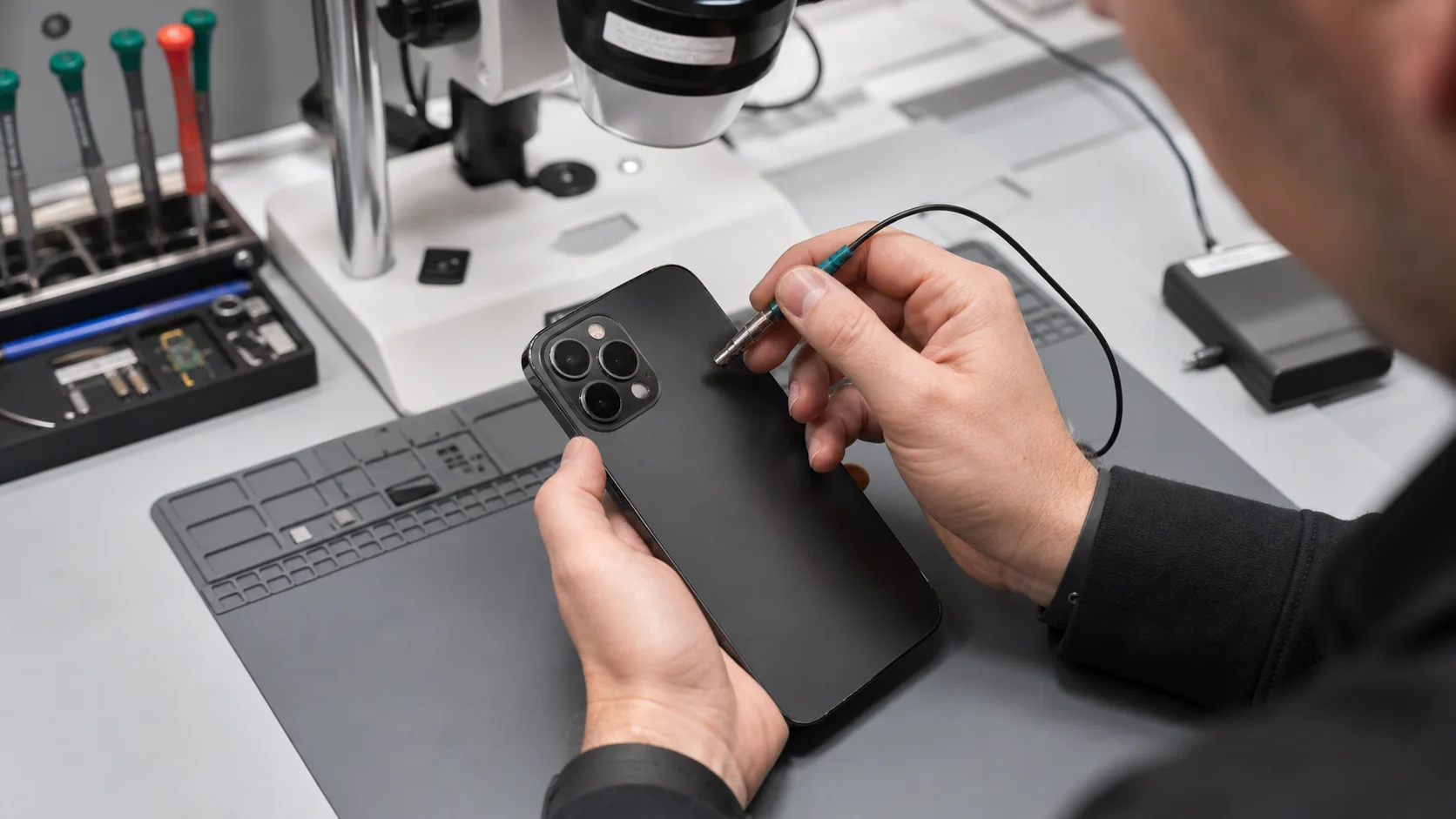
An iphone camera not working is a multi-faceted failure that can stem from software conflicts, sensor degradation, or physical damage to the intricate optics. When the Camera app displays a black screen, fails to focus, or crashes upon launch, it indicates a breakdown in the communication between the iOS software and the sophisticated hardware modules.


Key Takeaways

  • Black Screen Diagnostics: Often caused by software hangs or hardware disconnected via drop impact.
  • Focus Issues: Usually linked to a failing OIS (Optical Image Stabilisation) motor.
  • Component-Level Complexity: Modern iPhone cameras use multiple lenses and sensors that require logic board diagnostics to isolate faults.
  • Thermal Throttling: Extreme heat can temporarily disable camera functionality to protect the processor.
  • Professional Restoration: Attempting DIY repairs on camera modules can permanently disable Face ID due to Apple’s component pairing.
  • Sustainability: Repairing a faulty camera module is a superior environmental choice compared to device replacement.

Understanding Why Your iPhone Camera Fails

The imaging system in a modern smartphone is a marvel of miniaturised engineering. It is not a single unit but a complex hiearchy of lenses, image signal processors (ISP), and sensitive CMOS sensors. When you experience your iphone camera not working, we look for failures in this chain.

Failures are typically categorised into three tiers: transient software glitches, modular hardware failures, and deep-seated logic board issues. We frequently see devices where a simple restart fails to rectify the issue because the problem lies within the physical electromagnetic actuators that move the lens for autofocus.

Our precision-engineered approach at FixFactor ensures that we don’t just guess which part is failing. We utilise advanced diagnostics service protocols to verify if the camera is receiving the correct voltage from the power management IC (PMIC).


Common Symptoms and Their Technical Roots

Symptom Likely Technical Cause Complexity Level
Black Screen / Viewfinder won’t load ISP Hang or Detached Flex Cable Low to Medium
Shaking or Humming Viewfinder OIS (Optical Image Stabilisation) Failure Medium
Flash stays on or won’t fire Logic Board Short Circuit High (Micro-soldering required)
Blurry Images at all distances VCM (Voice Coil Motor) Seizure Medium

The Impact of Physical and Liquid Damage

Even if the glass lens appears pristine, internal kinetic energy from a drop can crack the microscopic ceramic mounts within the camera module. This results in an iphone camera not working because the sensor loses alignment with the lens stack. We often find that “ghost” vibrations occur when the magnets inside the camera are dislodged.

Liquid ingress is another silent killer of camera functionality. Moisture often enters through the speaker grilles or the SIM tray and migrates toward the camera connectors. We provide specialised liquid damage repair that involves ultrasonic cleaning to remove corrosion from the delicate FPC (Flexible Printed Circuit) connectors.

Professional restoration in these cases involves more than just swapping the part. We must inspect the surrounding circuitry for corrosion that could lead to a short circuit in the future. This comprehensive solution is what separates elite restoration from high-street “quick fixes.”


How We Restore Camera Functionality

  1. Initial Visual and Software Audit: We check for “Parts and Service History” messages in iOS settings.
  2. Chassis Disassembly: Using precision tools, we open the device without compromising the delicate OLED display.
  3. Microscopic Inspection: We examine the camera’s ZIF connectors for any signs of oxidation or bent pins.
  4. Voltage Rail Testing: We verify the camera receives the necessary 1.8V and 2.8V power signals from the logic board.
  5. Module Replacement: If the sensor is burned or the OIS is dead, we install a high-quality replacement module.

Software Conflicts and Firmware Corruption

Sometimes the hardware is flawless, but the iphone camera not working due to a software bottleneck. The Image Signal Processor (ISP) integrated into the A-series chip can occasionally become unresponsive. This is common after an interrupted iOS update or when the internal storage is critically full.

Before assuming a hardware fault, we recommend a “Force Restart.” This isn’t a simple power-off; it’s a hardware-level signal that forces the CPU to re-initialise all connected peripherals, including the camera sensors. If the issue persists across different apps (e.g., Instagram, WhatsApp, and the native Camera app), the fault is almost certainly hardware-based.

In rare cases, system-level corruption requires a full DFU (Device Firmware Update) restore. This overwrites the firmware that controls the camera’s low-level operations. We treat this as a last-resort software step before proceeding to component-level repair.


The Danger of Non-Genuine Camera Repairs

Apple employs a technique known as “software serialisation” or “parts pairing.” If you seek a repair from an unverified source, your iphone camera not working might be replaced by a working part, but certain features like Cinematic Mode or True Tone might be disabled. We navigate these complexities with technical certainty.

We believe in transparency. When we restore your device, we explain the implications of part pairing and work to ensure the most stable outcome. Our goal is to maintain the device’s integrity, ensuring it remains a professional-grade tool for photography and communication.


Advanced Logic Board Diagnostics

When a new camera module is installed but the viewfinder remains black, the issue resides on the logic board. This is where high-street shops usually give up, but where we excel. An iphone camera not working can be the result of a blown filter or a tiny capacitor that has shorted to ground.

Using micro-soldering, we can replace these microscopic components under 40x magnification. This level of advanced repairs saves you from the cost of a full motherboard replacement or, worse, being told your phone is “beyond economical repair.”

We map out the circuit using schematic software to find exactly where the electricity stops flowing. By restoring these traces, we extend the lifecycle of your hardware, providing a sustainable alternative to the “throwaway” culture encouraged by many manufacturers.


Logic Board Failure Triggers

  • Electrical Surges: Using low-quality charging cables can spike the PMIC, affecting the camera’s power rail.
  • Long-term Vibration: Mounting an iPhone to a motorcycle handlebar can vibrate the OIS and logic board components to failure.
  • Bent Frame: Micro-cracks in the motherboard layers can sever the data lines between the CPU and the camera.

Temperature, Thermal Throttling, and Storage

Your iPhone is designed to protect its internal components. If the device exceeds safe operating temperatures, you will find the iphone camera not working or the flash disabled. This is an intentional safeguard, not a permanent fault. If your phone is hot to the touch, allow it to cool in a shaded area, away from direct sunlight.

Furthermore, internal flash storage plays a role in camera stability. High-resolution 4K video recording requires a high-speed “write” to the storage chips. If your storage is nearly at maximum capacity, the Camera app may freeze or fail to save files, manifesting as a functional failure.

We recommend maintaining at least 10% of your storage as free space to allow for system caching. If your phone is stuck in a boot loop or the camera won’t open because of storage issues, we offer data recovery services to rescue your media before performing a system wipe.


Step-by-Step Initial Troubleshooting Guide

  1. Check for obstructions: Remove any case or magnetic lens attachments that might interfere with the OIS.
  2. Clean the lens with a microfiber cloth to rule out focus issues caused by oils or debris.
  3. Check privacy settings: Ensure the app you are using has permission to access the camera (Settings > Privacy > Camera).
  4. Close all background apps to free up the ISP’s processing power.
  5. Check for iOS updates: Occasionally, Apple releases patches specifically for camera driver stability.

The Commercial Impact of Camera Downtime

For many of our business services clients, the iPhone is more than a phone; it is a scanner, a video conferencing hub, and a content creation station. A failure is a direct hit to productivity. We recognise that professionals cannot wait weeks for a repair.

Our London-based technology repair specialist facilities are designed for speed without compromising on the master-craftsman quality we are known for. We offer a repair-first philosophy that prioritises getting your device back into your hands with its original data intact.

Whether you are a realtor capturing 360-degree tours or a drone pilot using your iPhone as a flight monitor, we provide precision-engineered fixes that withstand the rigours of professional use. Our Our Warranty covers the repair, giving you peace of mind that the fix is permanent.


Component Comparison: Original vs Aftermarket

  • Connector Fit
  • Feature Original/OEM Grade Low-Quality Aftermarket
    Image Sharpness Crystal clear, native resolution Grainy or soft edges
    Stabilisation Smooth 4K video Jittery or “wavy” video
    Precision click, secure connection Loose fit, potential to disconnect
    Autofocus Speed Instantaneous Hunting or slow focus

    Why High-Street Repairs Often Fail

    Most mall kiosks and high-street shops are only equipped for “screwdriver repairs”—simple part swaps that do not address the root cause. If your iphone camera not working is due to a short circuit on the logic board, these shops will likely misdiagnose it or damage the device further.

    We often receive devices that have been “butchered” by inexperienced technicians who have torn the delicate Face ID cables while attempting a camera repair. At FixFactor, we treat every device with the reverence of a master horologist. We use heat-controlled workstations and anti-static environments to ensure no secondary damage occurs.

    Our expertise extends beyond smartphones to computer repair and drone repair, giving us a broader understanding of how different high-end electronics interact. This multi-sector experience allows us to bring advanced techniques from aerospace electronics to your handheld device.


    Frequently Asked Questions

    Why is my iPhone camera screen black but the front camera works?

    The front and rear cameras operate on independent circuits and power rails. A black screen on the rear camera usually indicates a failure of the specific rear camera module or its dedicated power supply on the logic board. It is rare for both to fail simultaneously unless there is significant liquid damage.


    Can a cracked back glass cause the camera to stop working?

    Yes. When the rear glass shatters, tiny glass shards can migrate into the camera’s moving parts, seizing the focus motor. Furthermore, a crack compromises the device’s seal, allowing moisture and dust to settle directly onto the camera sensor, leading to permanent hardware failure.


    Will I lose my photos if you repair my camera?

    A standard camera module replacement does not involve the storage chips. However, if the fault is logic-board-based, we always recommend a backup. We pride ourselves on data recovery expertise and always aim to preserve your data during the restoration process.


    Why does my camera make a buzzing noise?

    The buzzing is the sound of the Optical Image Stabilisation (OIS) magnets rapidly vibrating. This usually happens if the camera has been exposed to high-frequency vibrations (like a motorbike engine) or a hard drop. The module must be replaced as this is a mechanical failure that software cannot fix.


    Is it worth repairing the camera on an older iPhone?

    Absolutely. Modern iPhones are incredibly powerful, and a camera repair is a fraction of the cost of a new device. By choosing to restore rather than replace, you contribute to a circular economy and reduce electronic waste, while maintaining a perfectly functional high-end tool.


    What does “Component-Level Repair” actually mean?

    It means we don’t just replace the whole “brain” (logic board) of the phone. Instead, we use micro-soldering to replace the specific tiny chip or capacitor that has failed. This is much more cost-effective and sustainable than replacing the entire board, which would also result in the loss of all your data.


    Expert Consultation: Selecting the Right Repair

    If you are struggling with an iphone camera not working, we invite you to experience a different level of technical service. We don’t believe in “fixes”; we believe in restoration. Our London facilities in Victoria and Wimbledon are staffed by specialists who understand the intricate nuances of Apple hardware.

    You can book an appointment through our Booking portal or use our convenient mail-in service from anywhere in the UK. Every repair starts with a comprehensive solution mindset—we don’t just treat the symptom; we secure the future of your device.

    Trust in technical certainty. Trust in FixFactor to bring your vision back into focus.

    Share Copied!
    Marcin Skwiercz

    Written by

    Marcin Skwiercz

    Founder & Director

    Running Fixfactor since 2014 with a hands-on background in microsoldering and board-level repair. Today focused on growing the business, tracking industry trends, and making sure every device gets the attention it deserves.